Understanding the Network Society Paradigm

Uncategorized

A network society can be defined as:

A term used to characterize the changes in a society brought about by the Internet communication technologies and in which individuals and groups organised around digital information networks. 

This week we covered how a network society was developed by global information networks with the establishment of computers and the internet in our everyday lives.

Spanish sociologist Manuel Castells developed the definition of a network society. Being the foremost theorist of the concept, he shared that it is a society whose social structure is made up of networks powered by micro-electronics-based information and communications technologies.” His analysis included social, cultural, political and economic factors that are affected by the growth and production of accessible technology that brings us together on a global scale.

Facebook is a perfect example of a network society, where anyone who chooses to can join the network, communicate and contribute to its conservation. Some people are more inactive than others, however, they are still considered to be contributors in this society – though not as present.

I added a glitch to my remediation this week because the rapid increase of internet use has globally impacted our ability to network faster and more efficiently around the world.

giphy-7.gif

A global nervous system: from the telegraph to cyberspace

BCM206, Uncategorized

We are an incredibly connected society through the rapidly growing technologies – from the beginning with the first dot-dash telegraph to accessing messages through our fit-bit tracking watches. I’m sure in 1837 Samuel Morse, the creator of the telegraph, had high expectations for global communications – but would he believe how accessible it is now?

Our world has developed into a cyberspace universe where you can contact the other side of the world in a second. The luxury of modern communication is almost taken for granted now.

giphy-2.gif

We can see this digital media world almost as a ‘nervous system’ where communities from around the world can discuss common interests. Social media platforms such as Twitter, Reddit and Facebook all contribute accessibility to this nervous system which allows communication to be fast, effective and global.

Remediation: (Meme)

giphy-4.gif

BCM206 Project Pitch

BCM206, Uncategorized

For the last year on Instagram, I have been developing my digital art page as it has grown with me. Now that I have a particular style I have decided I want to monetise my works.

My options to monetise my work include opening an Etsy store to create prints or self promote through Instagram e.g. promoting my edits and personalised commissions.

I want to explore different genres and maybe more newly released films to attract a larger audience.

I will gather feedback from the number of commissions that I am asked for as well as the engagement of my audience through likes and comments.

Digital art has become a big passion of mine and I am excited to see where this BCM206 journey takes me with my business.

If you want to know more watch my project pitch video below:

Instagram: @rwfreckled

The Cinema-Going Experience, is it Worth the Hassle?

BCM241

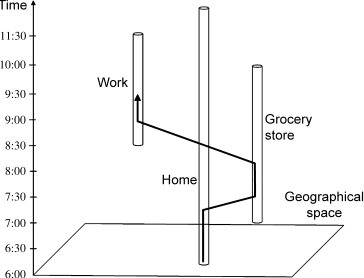
We have all romanticised our picture-perfect cinema experience. It has been an activity linked to romance ever since motion pictured was available to the public. However, organising a trip to the cinema is never as easy as we think. Torsten Hägerstrand and his theory of time geography explore the time-consuming constraints that may affect our ability to consciously do something. Hägerstrand divides these constraints into three groups:

  • capability: can I get there?
  • coupling: can I get there at the right time?
  • authority: am I allowed to be there.


Image result for hagerstrand

“Time geography examines how humans allocate scarce time resources among activities in geographic space, the use of transportation and communication technologies to facilitate this allocation, and the patterns and relationships that emerge from these allocations across the population.” Miller H. (2008) Time Geography

To compare Hägerstrand’s theory with an everyday scenario, I will use my personal movie theatre experience that I had last week, and work out if any constraints impacted my ability to do this activity. About 5 days ago I had a date at my nearest movie theatre to see The Lion King. Usually, I would go through in my head the possible factors that could disrupt the flow of the night. This was just a nervous habit to prepare me for such moments, however, it turned out to be a personal exploration of the constraints that Hägerstrand theorized in his work.

Image result for the lion king

IMP, (2019)

Firstly I thought of the capability constraints. Can I afford a movie ticket? Do I have a way to get to the theatre? Luckily I had just been paid and could afford to buy petrol to get me to my destination. Despite me being pretty blind, this was not a constraint as I had my glasses with me. We also planned to eat before the movie, so it wasn’t as if we were impaired physically or biologically and therefore not able to complete this task. We both lived quite close to the movie theatre that we picked, so we were both quite capable of arriving at the theatre on time.

Next, I would look into possible coupling constraints. This could involve possible restrictions with aligning my schedule to the other person. I planned to go to the cinema with my date, so we organised a time where we both available that would align with the time the movie was showing. We planned to meet at 6pm for dinner and then to see the 7:45pm movie.

Authority constraints were not restrictive in this scenario, as we were both old enough to access this movie rated G. We were also aware of the time constraints with parking, as well as the closing of the cinema. Luckily, parking at this cinema is free and open after 6pm, and we had a movie time early enough before the entire shopping centre closed.

Cinema experiences are usually thought of as romantic date ideas between two people. However, ever since the growth of streaming services across multiple platforms, people have no longer felt the need to make the effort to meet at a cinema. It is so much easier to create a “Netflix and chill” moment in someone’s home, where capability, coupling and authority limitations are looser and easily dealt with. Netflix’s business model of “easy accessibility” eliminates the hassles of planning and scheduling as well as travel and parking hassles.

Personally, I would still prefer a cinema-going experience because I like the idea of a romantic night out. But in the reality of this generation, streaming in the comfort of your own home is so much easier and cuts travel and organising time in half.

movies.jpg

Benny Lewis, (2019)

References:

Miller H. (2008) Time Geography. In: Shekhar S., Xiong H. (eds) Encyclopedia of GIS. Springer, Boston, MA

Images:

IMP, (2019), The Lion King (2019). Available at: http://www.impawards.com/2019/lion_king_ver22.html [Accessed 26 August 2019].

Jake Berninger, (2019), Streaming services’ success spreading. Available at: https://mcctartan.com/1031/arts-and-entertainment/streaming-services-success-spreading/ [Accessed 26 August 2019].

Benny Lewis, (2019), Is Watching Foreign Language Movies a Waste of Time?. Available at: https://www.fluentin3months.com/movies/ [Accessed 28 August 2019].

Digital Artefact: Contextual Essay #BCM112

Uncategorized

My digital artefact is an art-based Instagram page where I edit film-stills from my favourite films into cartoons. Exploring the romantic and comedy genres, I used the digital painting medium to create my works. My project is developed around the idea that my audience want to find new films to watch, and so I explored this by framing my works to look positive and engaging with the help of brighter colours, clear captions and audience participation.

thumbnail_IMG_0209

Digital art was not something I expected to have even taken on, however this experience has helped shed new light on the union of technology and art. In order to engage my audience I had to explore the concept of framing to find a way to communicate my work successfully. R. Entman describes this process as a way to “select some aspects of a perceived reality and make them more salient in a communicating text.” This allows the audience to gain a public understanding of the message that you are trying to communicate. For a wider media example, framing in the news may be described as being “not an exact representation of reality but rather a reconstruction from various angles of a small section of reality.” My art reconstructs the film and their meanings and explores them with a more zoomed in and almost rose-tinted light. This is assisted with quotes and positive colours.

Early Ideation 

1.jpg

First Post on @rwfreckled

When I first began developing my digital artefact, I always kept in mind that my work should be easy and simple, and so the drawings I created had been little time consuming and inexpensive. The designs only took an hour or so to create per post, and I used an app called Paint for Mac, which was free. I focused on entertainment value for my audience, constantly looking for popular movies and quotes, as well as checking on my Insights to see what my audience engages with the most.

2

Most Recent Post on @rwfreckled

Prototyping and Iteration

A major change that I made in my digital artefact process was the switch from Microsoft Paint to Procreate. I had dropped the use of quotes to make my works more simplified and appealing, which is an aesthetic that I learnt did not work for my audience. I have also tried to keep the colours of my artwork aesthetically aligned with each other so my project looks more collected. I wanted to keep a bright and pastel vibe to my artworks, and continue with a more positive-looking aesthetic.

 Example:

image1.png

example of use of stories to engage audiences

I have kept my focus towards romantic comedies as this is the genre that I personally liked. However, I have learnt through engagement that my audience has a preference for comedy and more popular and classic films rather than specifically the romantic genre.

IMG_9361

As I continue my digital artefact, I intend to explore more popular films of other genres. Additionally, I have continued the use of Instagram stories and have been asking more specific questions such as what movies they would like to see in order to gain more personal engagement so I can improve within my digital artefact.

Engagement has been quite steady and has not increased or decreased dramatically in the past month. My goal is that I continue to strive for increased engagement and followers as I improve artistically and market my work appropriately. However, my feedback has remained positive which proves that I am heading in the right direction and am always open to critique and experimentation within my work.

Framing allows audiences to be influenced about how to process the information that is presented to them. My audience should feel positive and curious when they see my work as I used the natural frame-working technique to draw their eyes in. This was done through positive colours, short blurbs and constant questions on my story.

My digital artefact was a fun and creative way to explore a new art medium that I have never tried before. I hope to continue my Instagram page and see what more I can do with it!

By Rachel Weisz

Algorithmic control III: Price of Content

Uncategorized

How much do you think your data and patterns of behaviour on the internet could be worth to advertisers?

In today’s growing social media-driven society, companies have grown to understand the importance of having a social media presence when it comes to marketing their products. The term ‘influencers’ was coined to describe a group of people with a high follower count on social media. These influencers as known as the new celebrities. Because of their high following, companies use this social media approach by paying these influencers to exploit their consumers by advertising products for payment.

Companies are willing the pay a high amount of money for a couple of seconds worth of advertising on a post or video that can be seen by millions. The more followers you have, the more companies are willing to pay you for sponsorships. The price of content has been an important factor in the expansion of advertisement presence on social media – but is this getting out of hand?

Are we – as active audiences – being influenced into buying products because of it’s recognition with our favourite celebrities/influencers?

Tell us what you think!

Remediation: (warning: this video is a little loud)


Ethical Explainer: PTSD in Journalism

Uncategorized
Trauma and Wellbeing: PTSD in Journalism by Rachel Weisz

“Trauma can be defined as a psychological, emotional response to an event or an experience that is deeply distressing or disturbing.”

Traumatic occurrences are processed differently by everyone because of how individual our prior experiences are. These responses may lead to mental illnesses such as Post-traumatic stress disorder (PTSD), which is a psychiatric disorder. Journalists are faced with the dangerous probability of witnessing traumatic events due to covering issues with human suffering in their everyday work.

We must note that most parties that become bare to a traumatic event will not develop any recognised psychiatric disorder. In saying this, journalists who are repeatedly exposed to danger when covering stories are at a higher risk because they are not schooled in how to react to violence, as policemen and soldiers are, for example.

This explainer will focus on the risk of PTSD in journalism by exploring how, why and who can be affected.

What is PTSD

A psychiatric disorder refers to a clinically significant disturbance in an individual’s cognition, emotion regulation, or behaviour that reflects a dysfunction in the psychological, biological, or developmental processes underlying mental function.” One type of psychiatric disorder is PTSD, which can occur in individuals who have observed or even experienced an event which has been traumatic. This could include experiences such as natural disasters, war, a personal violent assault or a serious accident.

In journalism, many individuals will often encounter and report on human suffering, which can have a strong effect on their mental health and ability to practice ethically as a reporter. Young reporters specifically on their first reporting experiences must be aware of the MEAA Code of Ethics in order to practice ethically, however they must also understand that their own personal mental health can be at risk. Even meeting a survivor of whom have endured a distressing and traumatic even may precipitate PTSD.

Who is affected by PTSD

In World War II, “shell shock” was the name used to describe PTSD to describe the effects of war on the combat veterans who experienced “combat fatigue” and the traumatic events of the war.  However, PTSD can occur in all people, currently affecting 800,000 Australians.

It has been implied that people in journalism are tough enough to endure the experiences that may permanently impact ordinary layman. Journalists are constantly exposed when reporting on traumatic events so it should be basic knowledge to understand the mental vulnerabilities when covering issues of death and devastation. Until recently, media companies have acknowledged that reporting on these experiences may affect journalists long term. After the landmark court decision in 2019, media companies have started to recognise the effects of traumatic events in journalism as they come to face large compensation claims if they don’t.

How does it happen

News reporters and journalists report on events that are often distressing as a prerequisite of their profession. People with PTSD habitually experience intense emotions related to their traumatic experience. This may come in flashbacks or nightmares with intense emotions of fear, anger, sadness or a feeling of detachment. Individuals will also tend to avoid situations that could remind them of the events and also experience strong negative reactions towards something as little as a touch or a loud noise.

In 2009, a journalist entered the scene of a 4-year-old child being pulled out of Melbourne’s Yarra River. Darcey Freeman was thrown off a bridge by her father. The Age journalist happened to be one of the first at the scene. The journalist witnessed the girl being loaded into the back of an ambulance after the officers performed CPR. In 2013 she took a voluntary redundancy, however by this time her mental health had depreciated rapidly. In a legal first in the world, the newspaper company was found accountable by the court for the journalists PTSD as they failed to provide a safe workplace. The journalist was rewarded $180,000 in damages for PTSD.

What are the symptoms of PTSD

The three types of symptoms one can obtain through PTSD as a result of a traumatic event are;

  1. Re-experiencing (flashbacks)

  2. Avoidance

  3. Arousal

Re-experiencing refers to the reactivated recollections of traumatic events. These could come as memories, sensations or emotions that may occur either as recurrent thoughts or as nightmares during sleep. Flashbacks approach you unexpectedly, or they may be activated by something incidental in daily life.

Avoidance is a coping strategy for sufferers of PTSD, where they feel reluctant to return to the scene of the incident to avoid a situation that could trigger overwhelming stress. Another form of avoidance would be to mentally dissociate yourself from your body. This strategy allows sufferers to avoid living in the present where their stresses may lie.

The third coping mechanism is known as arousal, which refers to the intensified reactions of the body’s nervous system towards certain experiences. These may include the inability to fall asleep, irritability and lack of concertation. There may also be a feeling of constant alertness and being on edge.

PTSD frequently occurs with other conditions such as major depression and substance abuse. It is important to visit your doctor if you are feeling any of these symptoms, including feelings of sadness, inability to sleep, appetite disturbance, feelings of worthlessness and suicidal thoughts.

Code of Ethics

The MEAA Code of Ethics is the set of rules that journalists must follow to be ethical in their profession. Section 11 of the code states journalists must; respect private grief and personal privacy. Journalists have the right to resist compulsion to intrude. This point makes it clear that journalists should be aware of grief for other individual’s that they are reporting on. However, there is no code that explores the safe practices of journalists in the workplace to prevent the possibility of PTSD and other mental disorders.

Although journalists are not schooled on how to cope with traumatic experiences, they are still immune to the effects that can occur after an intense or disturbing job opportunity. The Dart Centre has compiled a 40-page guide to “help journalists, photojournalists and editors report on violence while protecting both victims and themselves.” If you believe you are suffering from PTSD or know someone who is, do not be afraid to ask for help.

Lifeline’s suicide hotline: text 0477 13 11 14
 

Algorithmic control II: Hardware Platforms, Access Permissions and Ideologies of Control

Uncategorized

remediation:giphy-2.gif

Open and closed media platforms for users and industries

When I was 14, I felt like the biggest tech wizard manually entering in a theme I found for my Tumblr blog on a sketchy website on the internet, hoping to god that it wouldn’t crash and destroy my entire life’s work. What I didn’t know back then was that this was a common software that websites used called open source software (OSS). OSS refers to software that allows users to copy, modify or delete code on a website. It is open to the public and allows for updates; improving and expanding it’s code as more people work on it. WordPress itself is another website that uses open source software.

If a website does not allow for the public to manipulate its code, they would be using a form of closed source software (CSS), which means it uses a closely guarded code that only the original authors of software can access, copy and alter. Some examples of CSS would include Microsoft Office and Adobe Acrobat.

For more information regarding OSS and CSS check out the video below:


Algorithmic control I: Intellectual Property and the Content Control Industry

Uncategorized

Content Control on Social Media

social media animation GIF

“Social media was, in a sense, a way to bring the oral tradition to the written world: a living discourse of our personal histories as it happened, recorded in the way we chose suited the narrative best” (Friske, T. 2018.)

Despite still some truth in this quote, we are now discovering ways to mask our reality with what we want people to see.’

Our lives tend to be on constant revision now, as we only seem to post what we think the world wants to see. Since the launch of the new algorithms on social media sites such as Facebook, Instagram and Twitter, we find that our history is no longer linear. We only see posts from people that we may have recently engaged with, have more ‘likes’ or we are infiltrated with an ad tailored to our interests.

Image result for social media feed algorithm

The content that we post is now controlled by the social media algorithms, strategically sharing our posts to those who engage with us more. This sometimes has negative affects some individuals professional jobs. For example, if an art page’s posts are only being viewed by 20% of their following, that is not very good for their business and their growth.

Secondly, companies are now exploiting this algorithm to reach consumers in very interesting ways. Celebrities with high following are being paid to promote certain products because more people will see these posts.

Image result for kylie jenner bondi sands

Content control is now an important factor in social media thanks to it’s new and constantly changing algorithms that share posts and ads relevant to you, as well as being used as a tool to promote products by companies.

Remediation:

giphy (1).gif

Source: Friske, T. 2018. This Isn’t About Social Media. This is About Control. Medium. Access: https://medium.com/tootsuite/this-isnt-about-social-media-this-is-about-control-112dea8a21fd

Project Beta #BCM112

Uncategorized

Screen Shot 2019-05-17 at 12.13.57 pm.png

@rwfreckled by Rachel Weisz

I decided to make my Instagram account called @rwfreckled because I thought it would be an entertaining idea to share my artwork with an audience that is interested in films.

I use Instagram as it is a good platform for artists to share their work and engage with a community who share the same interests. I am always looking for new films to see and artists to admire and enjoy being surrounded by a community that feels the same way.

IMG_3670.PNGIMG_3671.PNG

Instagram also lets me engage with my audience through comments, polls, and questions on my story. My current focus is building my online presence and focusing on engagement with my audience. I am doing this to build a strong group of followers that genuinely like my posts. This is important because strong engagement means more people sharing my work = new followers. No follow/unfollow method or buying followers.

Picture1.png

I post every Sunday – between midday and 10pm.

I have learnt that posting content is 80% of what they want and 20% what you want to post. So although previously I thought to focus on a specific genre (romantic comedies), I don’t think that it is effective enough when it comes to maintaining the audience I currently have. They seem to like more comedic/action/classic films.

So has my concept changed based on feedback?

Yes and no

Yes:

-My sole focus with my films is now on films that people are familiar with. E.g. if most of my followers want to see a certain movie, I will share that with them. I will constantly ask via my Instagram story what my consumers want to see. This is a change from my romance genre theme.

No:

-I am still focusing on sharing my love of film in the form of art. People have come up to me and told me they watched a certain film because it was on my page which is positive feedback.

– I will still continue to post weekly and maybe more in order to entertain my audiences and promote my work.

The Future

  • Continue posting each week
  • Offer personalized edits to gain more commissioned work
  • Consider merchandising as an option for the future.


Check out my project beta video here: